

Dental Implants in Turkey: A Practical Guide for UK Patients
Explore dental implant options in Antalya, assessment, visits, aftercare and questions to ask before travelling from the UK or Ireland.
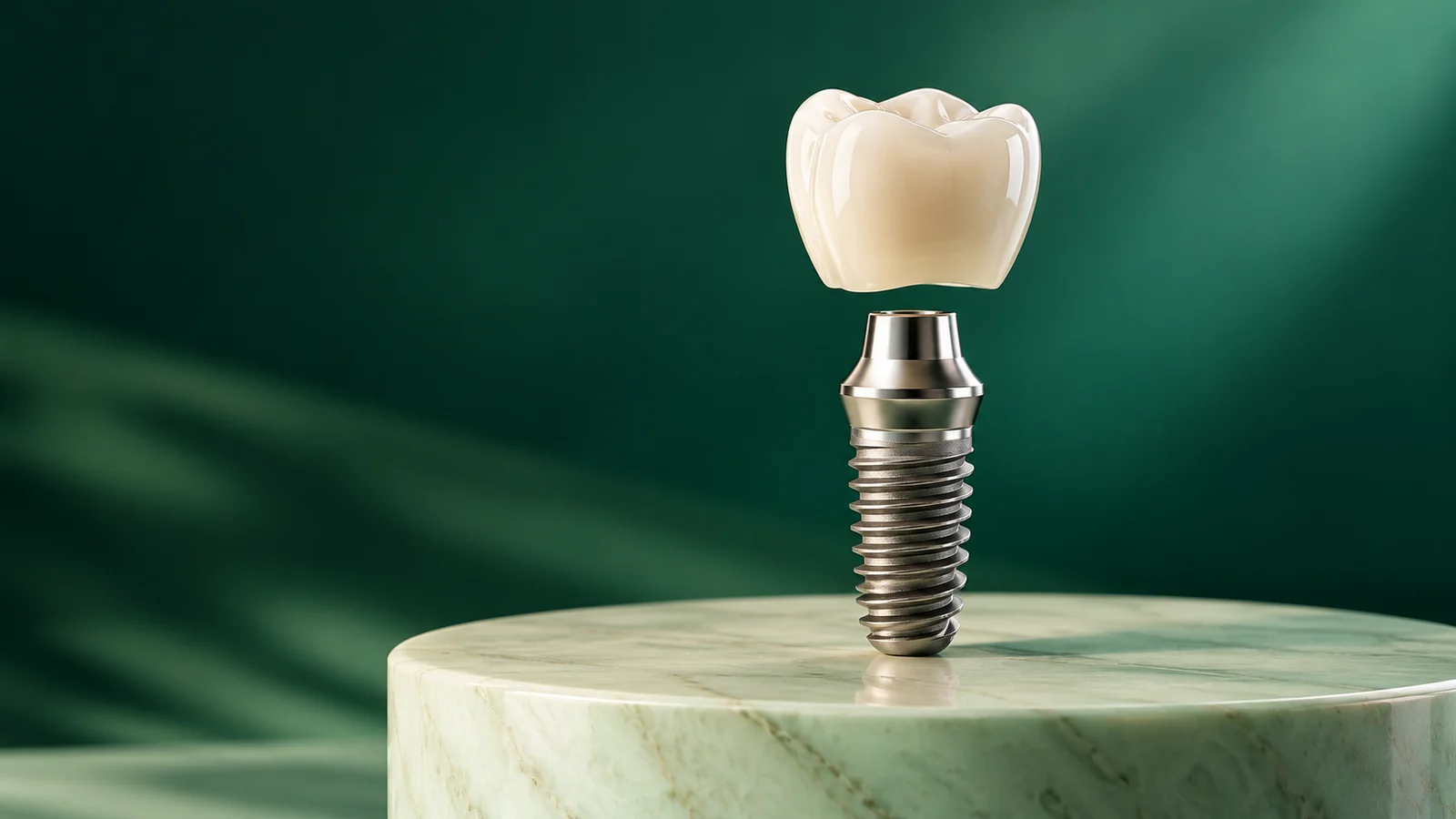
Conceptual illustration of an implant and crown. Not to scale; components vary by treatment plan.
When researching dental implants in Turkey, look for a proposal that explains the treatment for your own mouth. It should identify the people responsible for your care, the appointments involved and the arrangements after you return home. Having that information in writing gives you a useful basis for comparing your options.
This guide is for people in the UK and Ireland considering treatment in Antalya. It will help you organise your questions, read clinic information critically and prepare for a conversation about your options. You do not need to arrive knowing which implant system or treatment name to choose.
Start with the teeth you need to replace
Dental implants sit in the jaw and support replacement teeth. Depending on the plan, those teeth may be a crown, bridge or denture. [1]
An implant-supported crown replaces one tooth; a bridge can replace several. An implant-retained overdenture is removable. Conventional dentures and bridges supported by natural teeth are alternatives to discuss alongside implants. [2]
Before comparing treatment names, describe what you want help with. Is it a single gap, difficulty managing a denture, several missing teeth or concerns about your remaining teeth? Explain what matters in daily life: eating, speaking, appearance, cleaning or confidence in social situations.
If a proposal involves removing teeth, ask which teeth could be retained, what alternatives were considered and why extraction is being recommended. You should be able to explain the purpose of the proposed treatment in your own words before agreeing to it.
If you are exploring treatment for a whole arch, our guides to All-on-4 , All-on-6 and 3-on-6 explain the named approaches. Read the implant system comparison alongside them, or explore the full-mouth treatment guide if you want to discuss both jaws. Use the guides to prepare questions for the dentist who assesses you.
What an implant assessment needs to establish
Suitability depends on your oral health, the available bone and your individual circumstances. Assessment may involve examining the teeth and gums, X-rays and, where appropriate, three-dimensional imaging. The clinician also considers factors such as smoking, gum health and tooth grinding when discussing the outlook for treatment. [3]
Prepare an accurate medical history and a list of medicines, allergies and previous dental treatment. Ask how to share any existing records securely and whether further information is needed. Tell the team about previous difficulties with dental treatment, including anxiety, so these can be discussed before appointments are arranged.
Ask what remains provisional in any proposal made before an examination. Useful questions include:
• What needs to be checked in person before treatment can be confirmed?
• Which findings could change the proposed treatment or price?
• Who will explain those changes and give me time to consider them?
• How will I receive a copy of the agreed plan?
Understand the stages before booking your visits
Implant treatment can involve assessment, preparatory procedures, implant placement, healing and appointments to make and fit the replacement teeth. Healing may extend over several months, and restorative appointments form a separate part of the process. [5]
Where bone grafting is needed, its extent can affect the sequence. A smaller graft may be performed with implant placement; more extensive grafting can require a separate earlier procedure. [4]
Request a visit outline showing what is expected at each stage, how long you should allow in Antalya and which dates depend on clinical progress. Ask what you will leave with after the first visit and when the final restoration is expected to be fitted. Have temporary and final teeth identified separately in the paperwork.
Keep travel arrangements flexible until the team has explained the proposed schedule. If treatment takes longer than anticipated, you will want to know how appointments, accommodation and additional costs would be handled. Our Antalya treatment planning guide covers the practical questions to organise before travelling.
Check the people responsible for your care
Request the name of the dentist responsible for assessing you, the clinician placing the implants and the person responsible for the final restoration. Ask about their qualifications, relevant implant experience and professional registration, and how those details can be verified.
Give yourself time to review the answers. If different clinicians will be involved, ask how they share the plan and who takes responsibility for follow-up questions. Request an explanation in language you understand, with an interpreter if one is needed.
When reading reviews, look for context: the treatment described, whether the final teeth have been fitted and whether the patient discusses follow-up. An account of a welcoming first visit answers different questions from an account written after treatment has been completed. Photographs and testimonials can inform your questions, but they cannot predict your own result.
Discuss benefits and risks in relation to your own mouth
For a suitable patient, an implant-supported crown or bridge can replace missing teeth without relying on the neighbouring teeth for support. Implants can also help hold a loose denture in place. The value of either approach depends on the proposed restoration, your oral health and the alternatives available. [3]
Ask the dentist to connect the proposed treatment to your priorities. What improvement is being aimed for? What limitations should you expect? How will the design, appearance and practical cleaning requirements be discussed before the final teeth are made?
Possible complications include infection, implant failure, damage to nearby teeth or tissues, and nerve-related numbness. [1]
Soreness, swelling, bruising or bleeding can occur after implant surgery. Your dental team should explain your individual recovery instructions and follow-up arrangements. [6]
Ask which risks are particularly relevant to your case and what would happen if healing or the final result did not go as expected. A useful discussion includes possible further treatment, who would assess a problem and which costs might apply. Take time to ask again about anything you have not understood.
Plan aftercare before you travel
Implants need ongoing cleaning and professional review. The teeth attached to implants can also wear and may eventually need replacing. [3]
Ask for written instructions covering care after each stage and maintenance once treatment is complete. Have the cleaning method demonstrated for the restoration you receive. Confirm the review schedule and the contact route for an urgent concern, including when you are back in the UK or Ireland.
Your written aftercare arrangements should identify who will assess problems, whether a return to Antalya might be needed and how costs are allocated. If local follow-up is proposed, ask for the named provider and confirmation of the arrangement. Keep your treatment documents together so you can share them with another dentist when needed.
Compare the complete proposal
A quote is easier to assess when it names the treatment for each jaw, separates temporary and final work and states the inclusions for each visit. Check the treatment price page and use our implant cost guide to review the details.
Before deciding, make sure you can answer four questions: What is proposed? Who is responsible? What is included in the cost? What happens if the plan changes? Keep any unanswered questions on your list for the team.
Talk through your next steps
Book a free online information meeting with an International Patient Coordinator at Amazing Smile Turkey. You can ask about the clinic, communication, the documents to prepare and how visits to Antalya are organised. The meeting helps you gather practical information; decisions about suitability and treatment require assessment by a dentist.
Sources and further reading
1. US Food and Drug Administration: Dental Implants — What You Should Know . https://www.fda.gov/medical-devices/dental-devices/dental-implants-what-you-should-know
2. Leeds Teaching Hospitals NHS Trust: Dental Implants . https://www.leedsth.nhs.uk/patients/resources/dental-implants/
3. Cambridge University Hospitals NHS Foundation Trust: Dental implants in restorative dentistry . https://www.cuh.nhs.uk/patient-information/dental-implants-in-restorative-dentistry/
4. Cambridge University Hospitals NHS Foundation Trust: Bone grafting for dental implants . https://www.cuh.nhs.uk/patient-information/bone-grafting-for-dental-implants/
5. Guy's and St Thomas' NHS Foundation Trust: Having a dental implant . https://www.guysandstthomas.nhs.uk/health-information/dental-implants/having-dental-implant
6. Guy's and St Thomas' NHS Foundation Trust: After having a dental implant . https://www.guysandstthomas.nhs.uk/health-information/dental-implants/after-having-dental-implant
Related treatment information
Explore the related treatment guide ↗
